
9 steps to Rank a Recipe on Google
The Real SEO Strategy Behind My Top-Performing Recipe Pages
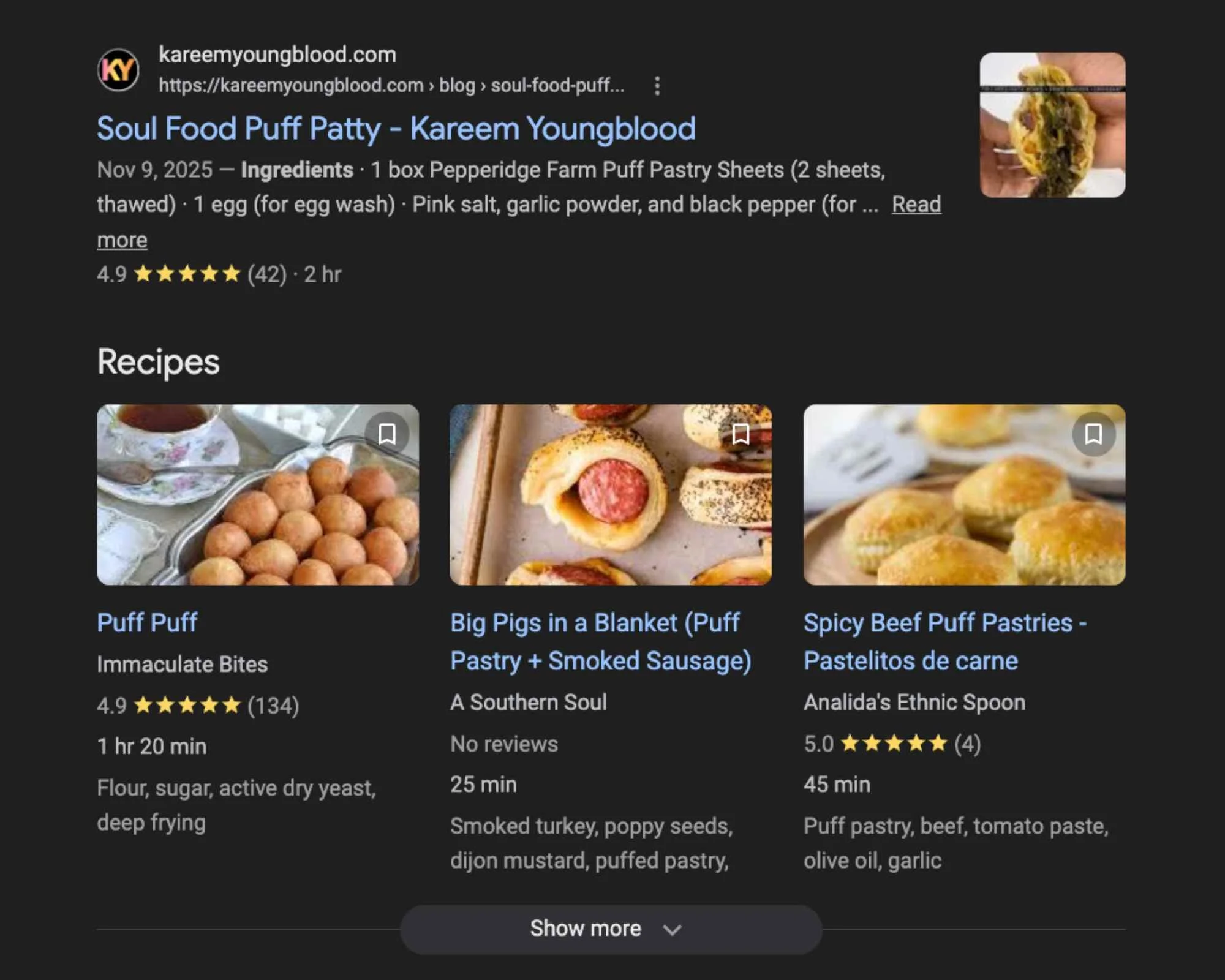
If you’ve ever Googled:
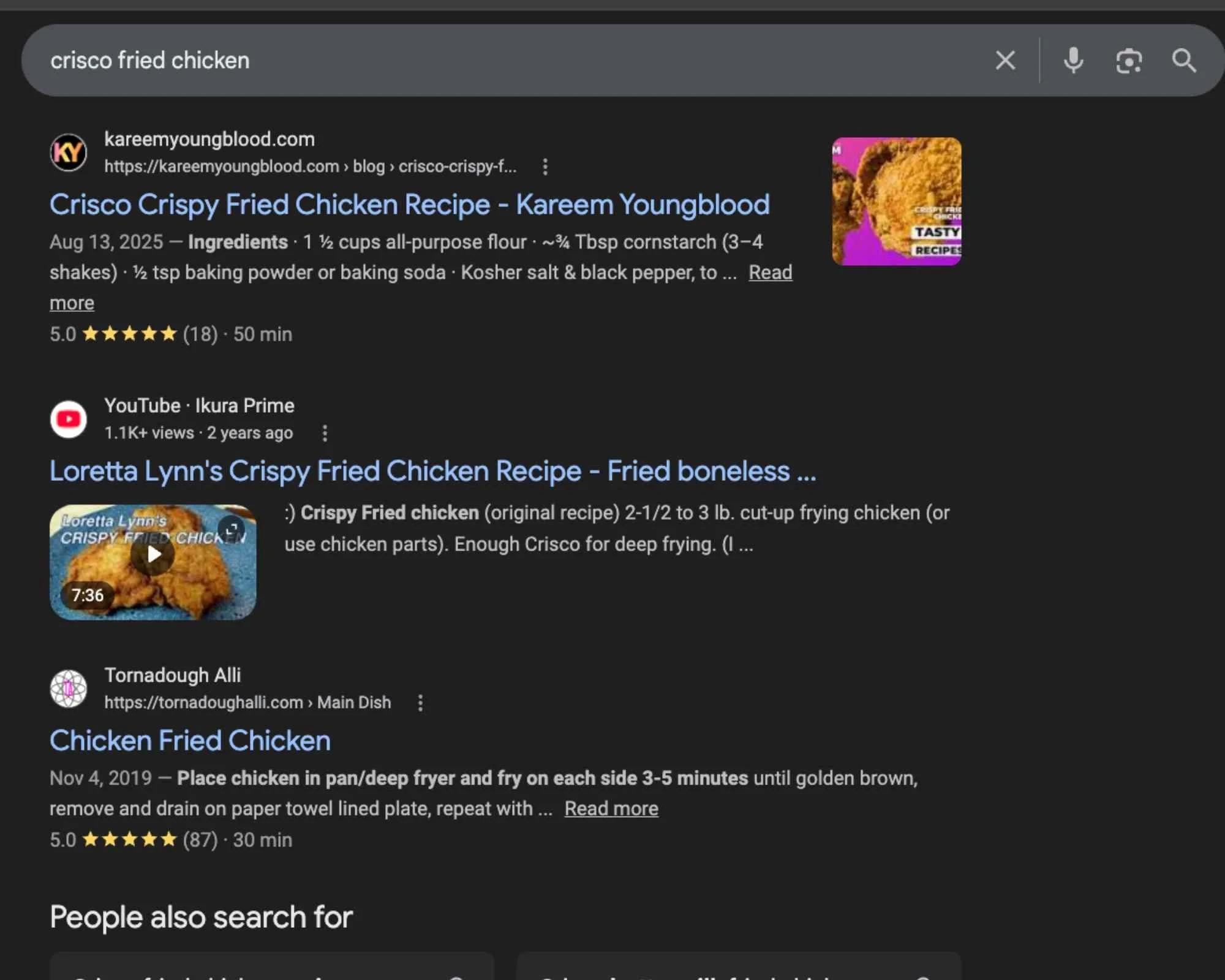
Crisco crispy fried chicken
Soul Puff Patty recipe
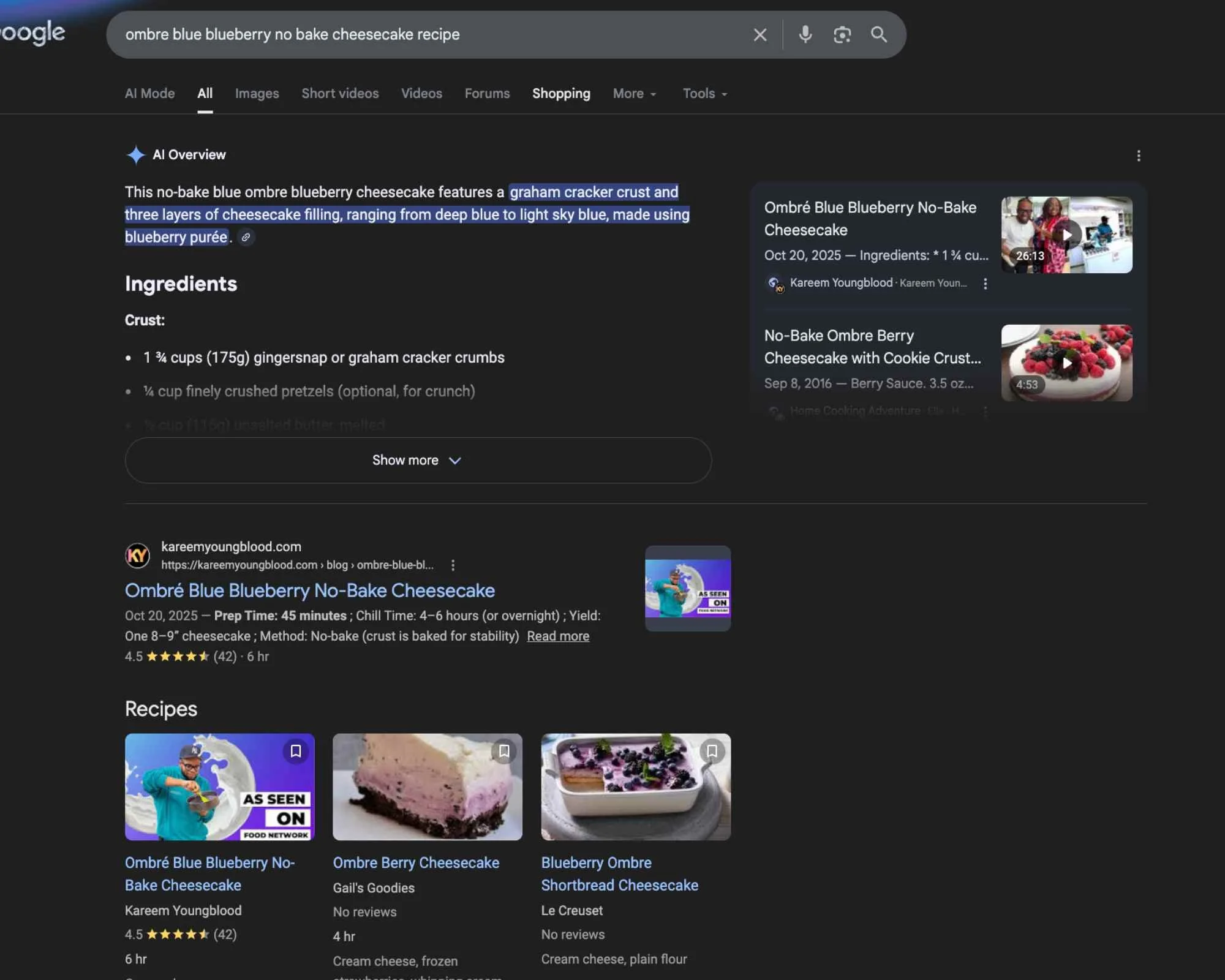
Ombre blue no bake cheesecake recipe
…and seen my face, my site, or my recipe in AI Overview…
That wasn’t luck. That was structure.
Today I’m breaking down exactly how to rank a recipe in 2026 — from schema markup to H1/H2 structure, from Jump to Recipe buttons to print pages, from progress bars to authority signals.
Because baking is art. But ranking is engineering.
Step 1: Start With Search Intent
Before you even hit publish, ask:
What exactly are people typing?
Is it informational? (“how to make…”)
Is it transactional? (“best recipe for…”)
Is it brand-based? (“Crisco fried chicken recipe”)
For example:
“Crisco crispy fried chicken” → Brand + outcome driven
“Soul puff patty recipe” → Original concept + niche authority
“Blue ombre no bake cheesecake recipe” → Visual + technique-based search
I don’t guess.
I search in incognito. I study “People Also Ask.” Look at AI Overview.
and reverse engineer the structure of top results.
Then I build better.
Step 2: Structure Matters
(H1, H2, H3 Hierarchy)
Google reads structure before it reads personality.
Here’s how your recipe page should be built:
One H1 Only: Your recipe title.
Example: H1: Crisco Crispy Fried Chicken Recipe
Clean H2 Sections
H2: Why This Recipe Works , H2: Ingredients, H2: Instructions, H2: Tips for Success, H2: Frequently Asked Questions
H3 for Breakdown
H3: For the Marinade, H3: For the Breading, H3: Frying Temperature Guide
This tells Google:
This is organized
This is readable
This is scannable
This deserves ranking
Structure = trust.
Step 3: Add Recipe Schema
(This Is Where Most People Fail)
If you’re not using Recipe JSON-LD schema, you’re invisible to rich results.
Schema tells Google:
Prep time
Cook time
Total time
Ingredients
Nutrition
Ratings
Yield
Author
Image
-
<!-- Recipe Schema (JSON-LD) — Fill in the ALL CAPS fields.
OPTIONAL blocks are marked. If you don't have them, delete the whole block cleanly. -->
<script type="application/ld+json">
{
"@context": "https://schema.org/",
"@type": "Recipe",
"name": "RECIPE_NAME",
"description": "RECIPE_DESCRIPTION",
"author": {
"@type": "Person",
"name": "AUTHOR_NAME"
},
"image": [
"IMAGE_URL_1",
"IMAGE_URL_2"
],
"recipeYield": "YIELD_TEXT",
"prepTime": "PT00M",
"cookTime": "PT00M",
"totalTime": "PT00M",
"keywords": "KEYWORDS_COMMA_SEPARATED",
"recipeCategory": "CATEGORY",
"recipeCuisine": "CUISINE",
/* OPTIONAL: Ratings — delete this whole block if you don't collect ratings */
"aggregateRating": {
"@type": "AggregateRating",
"ratingValue": "RATING_VALUE",
"ratingCount": "RATING_COUNT"
},
/* OPTIONAL: Nutrition — delete this whole block if unknown */
"nutrition": {
"@type": "NutritionInformation",
"servingSize": "SERVING_SIZE",
"calories": "CALORIES_TEXT"
},
"recipeIngredient": [
"INGREDIENT_1",
"INGREDIENT_2",
"INGREDIENT_3"
],
"recipeInstructions": [
{
"@type": "HowToStep",
"name": "STEP_1_TITLE",
"text": "STEP_1_INSTRUCTIONS"
},
{
"@type": "HowToStep",
"name": "STEP_2_TITLE",
"text": "STEP_2_INSTRUCTIONS"
}
],
/* OPTIONAL: Video — delete this whole block if you don't have a video */
"video": {
"@type": "VideoObject",
"name": "VIDEO_NAME",
"description": "VIDEO_DESCRIPTION",
"thumbnailUrl": "VIDEO_THUMBNAIL_URL",
"uploadDate": "YYYY-MM-DD",
"contentUrl": "VIDEO_URL"
}
}
</script>
Without this? You don’t get: Star ratings, Rich recipe cards, AI Overview pull quotes, Structured eligibility. Schema is non-negotiable.
Step 4: The “Jump to Recipe” Button
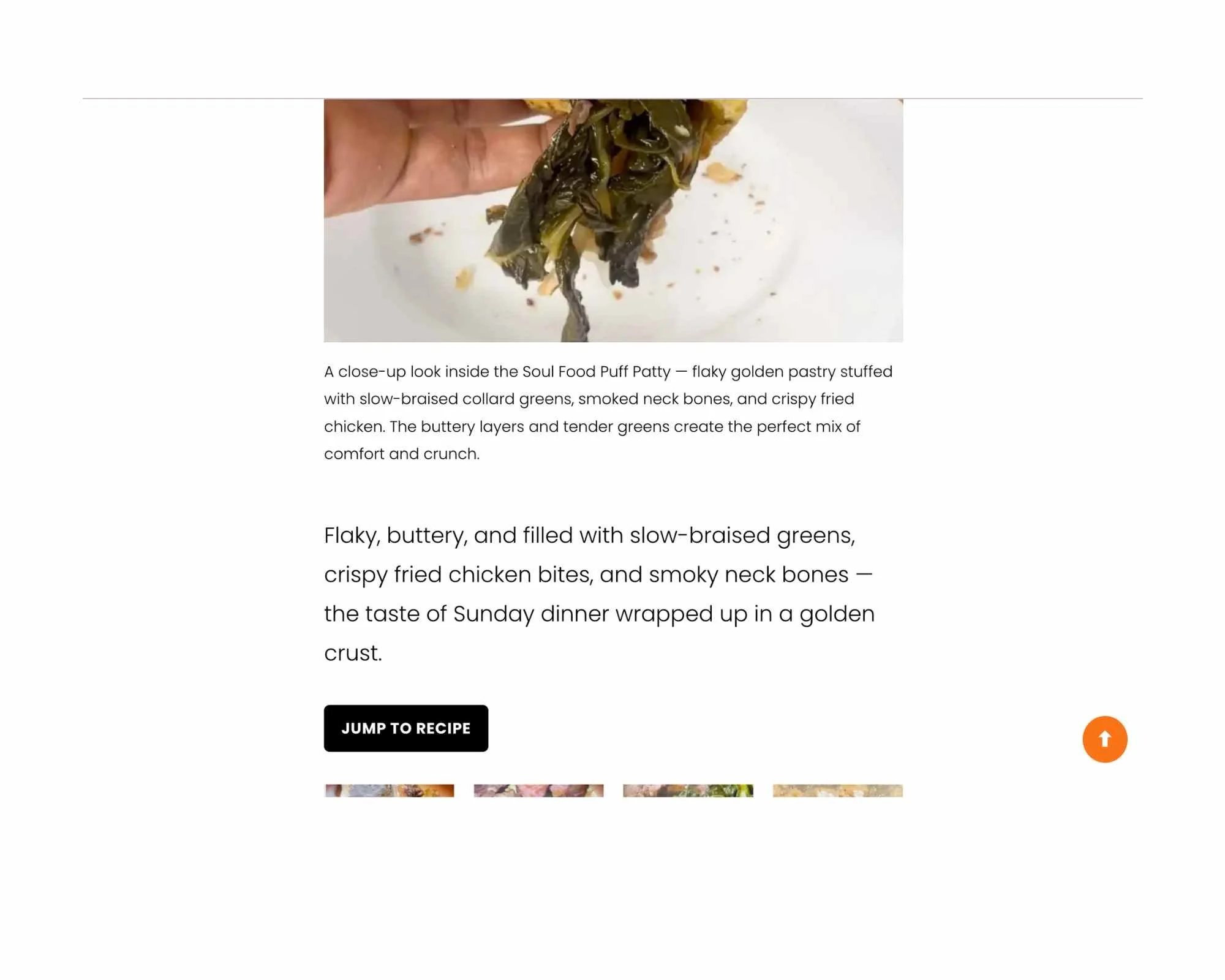
Yes, it matters. Not for ranking directly. But for dwell time and user behavior.
-
<!-- Jump to Recipe Button -->
<a class="jump-to-recipe" href="#recipe">Jump to Recipe</a>
<style>
/* Minimal styling that inherits the site's look */
.jump-to-recipe{
display: inline-flex;
align-items: center;
gap: .5rem;
font: inherit; /* use site's font */
color: inherit; /* use site's text color */
text-decoration: none;
padding: .65em 1em;
border-radius: .5em;
border: 1px solid currentColor; /* uses current text color */
background: transparent; /* keeps site style */
transition: transform .15s ease, opacity .15s ease;
}
.jump-to-recipe:hover{
transform: translateY(-1px);
opacity: .85; /* gentle hover without changing brand colors */
}
.jump-to-recipe:focus-visible{
outline: 2px solid currentColor;
outline-offset: 3px;
}
</style>
-
<div id="recipe-card">
Users who want the recipe get it instantly.
Users who want the story scroll.
Google sees healthy engagement.
User satisfaction = ranking stability.
Step 5: Add a Print-Friendly Version
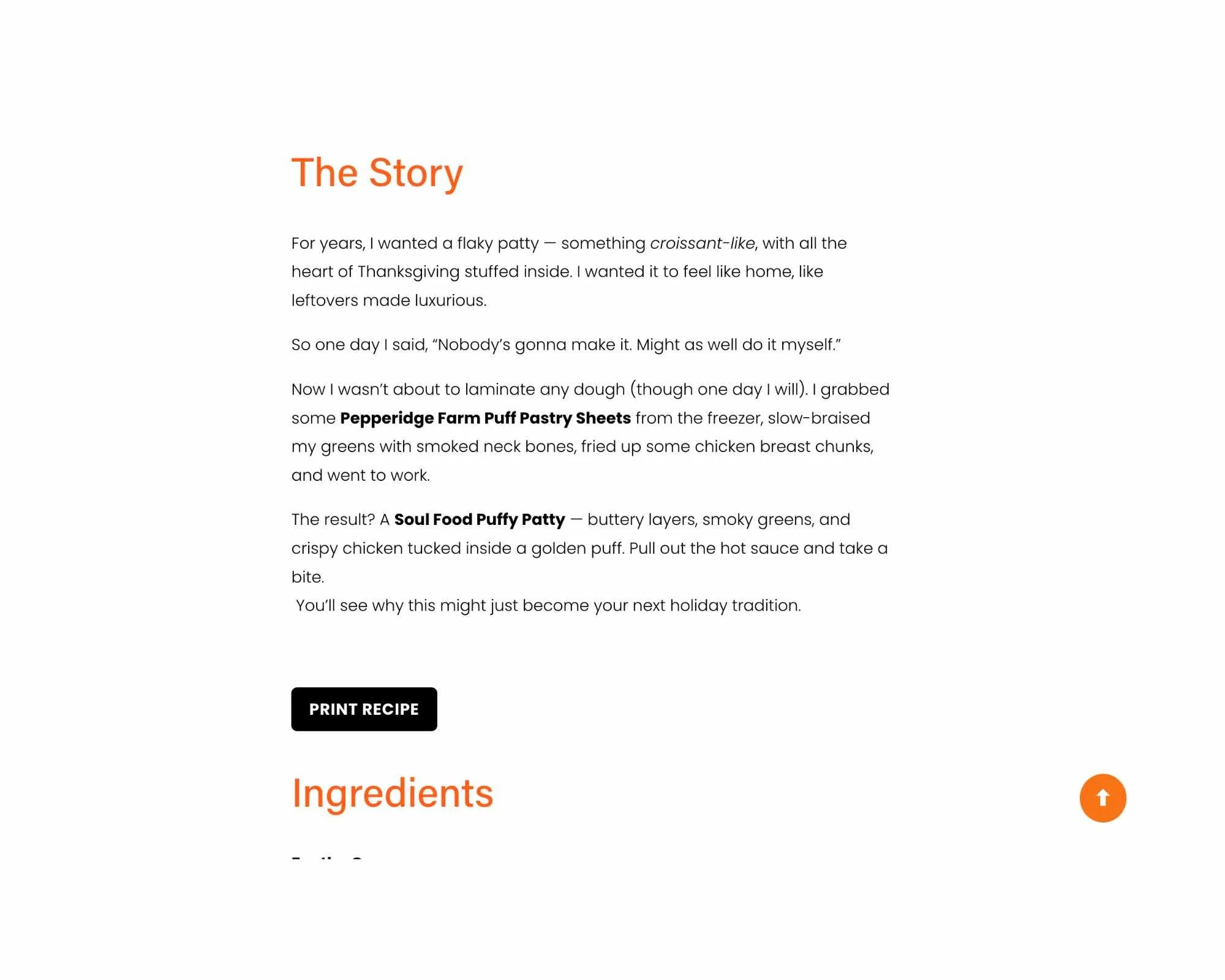
This is huge. Recipe bloggers who skip print lose:
Backlinks
Authority signals
User retention
-
<style>
.print-recipe{
display: inline-flex;
align-items: center;
justify-content: center;
font: inherit; /* uses site font */
color: inherit; /* uses site text color */
background: transparent; /* inherits theme look */
padding: .65em 1em;
border-radius: .5em;
border: 1px solid currentColor;
cursor: pointer;
transition: transform .15s ease, opacity .15s ease;
}
.print-recipe:hover{
transform: translateY(-1px);
opacity: .85;
}
.print-recipe:focus-visible{
outline: 2px solid currentColor;
outline-offset: 3px;
}
</style>
Google understands this as:
Functional UX
Complete experience
Professional formatting
You’re signaling authority.
Step 6: Add a Progress Bar
This is advanced. but easy!
-
<!-- Scroll Progress Bar -->
<div id="scroll-progress"></div>
<!-- Back To Top -->
<a id="backToTop" href="#top" aria-label="Back to top">↑</a>
-
<div id="top"></div>
Why it works:
Users feel guided.
Scroll completion increases.
Engagement metrics improve.
Google doesn’t rank the bar. It ranks the behavior.
Step 7: Internal Linking = Authority Loop
Every recipe should link to:
Related recipes
Technique posts
Ingredient explainers
Your About page
Your baking philosophy
Example:
If you loved this fried chicken, try my Soul Food Puff Patty.
This builds:
Topic clusters
Thematic authority
Entity recognition
Google starts seeing you as:
“This site owns this lane.”
Step 8: AI Overview Optimization
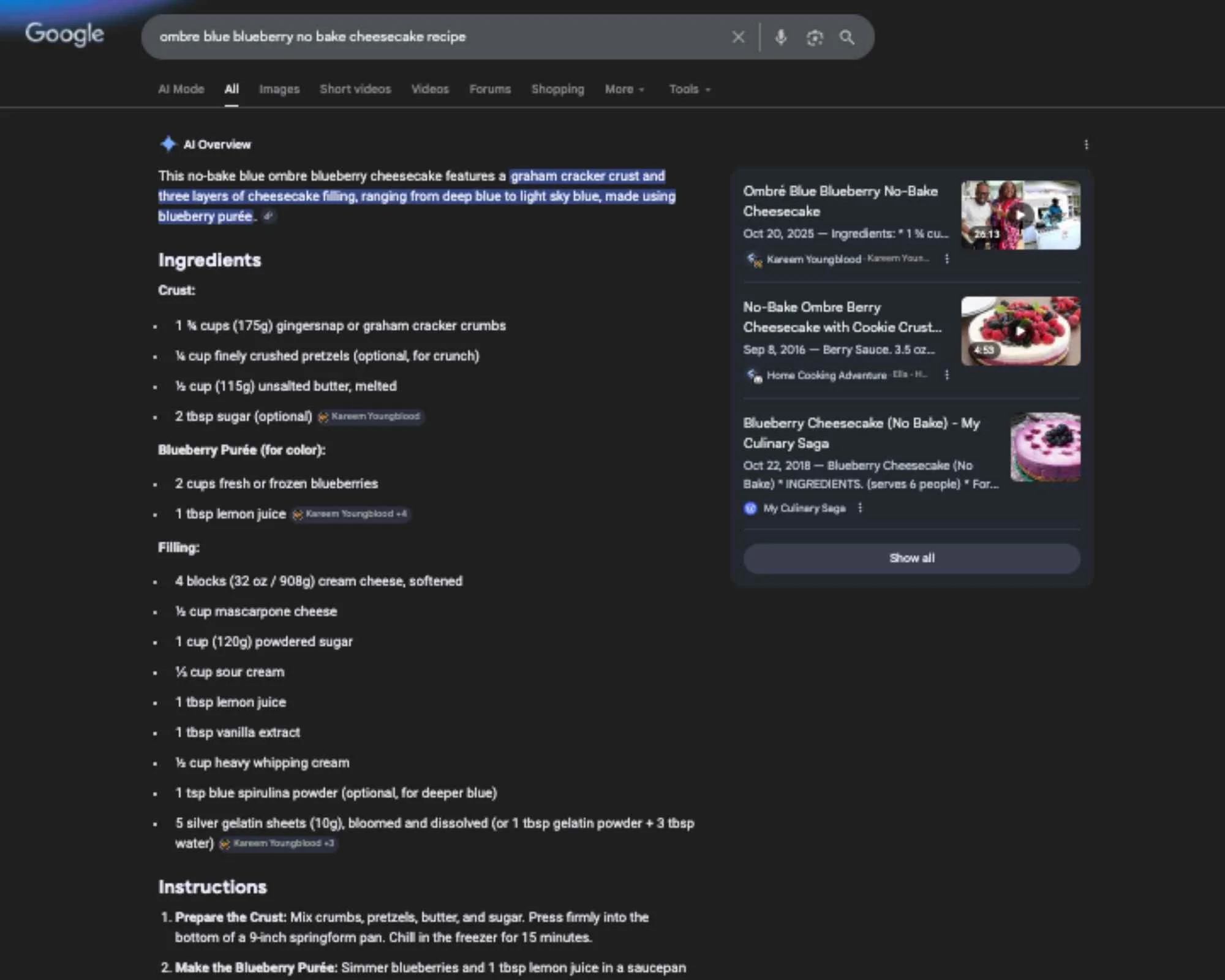
If you want AI to pull you:
Write clean definitions.
Add structured ingredient lists.
Use concise explanations.
Avoid fluff in technical sections.
AI loves:
Clear steps
Defined quantities
Temperature details
Proper nouns
Brand references when relevant
When my recipes started appearing in AI Overview, it wasn’t random.
It was formatting.
Step 9: Image Optimization
File names:
crispy-fried-chicken-crisco.jpgAlt text:
“Golden crispy fried chicken made with Crisco shortening on white plate”Compress images.
Add width + height attributes.
Use modern formats (WebP if possible).
Images rank in:
Google Images
Shopping
AI snippets
Visual search
The Bigger Strategy
Ranking recipes isn’t about keywords. It’s about: Structure, Schema, UX, Authority, Internal linking, Behavioral signals
When all of those align?
You don’t just rank. You dominate.
Final Thought
Baking is storytelling. SEO is formatting that story so machines can understand it. When you combine both? You don’t just make dessert.
You build digital legacy.
Need help of have any questions?
Comment or shoot me a email n the contact section
